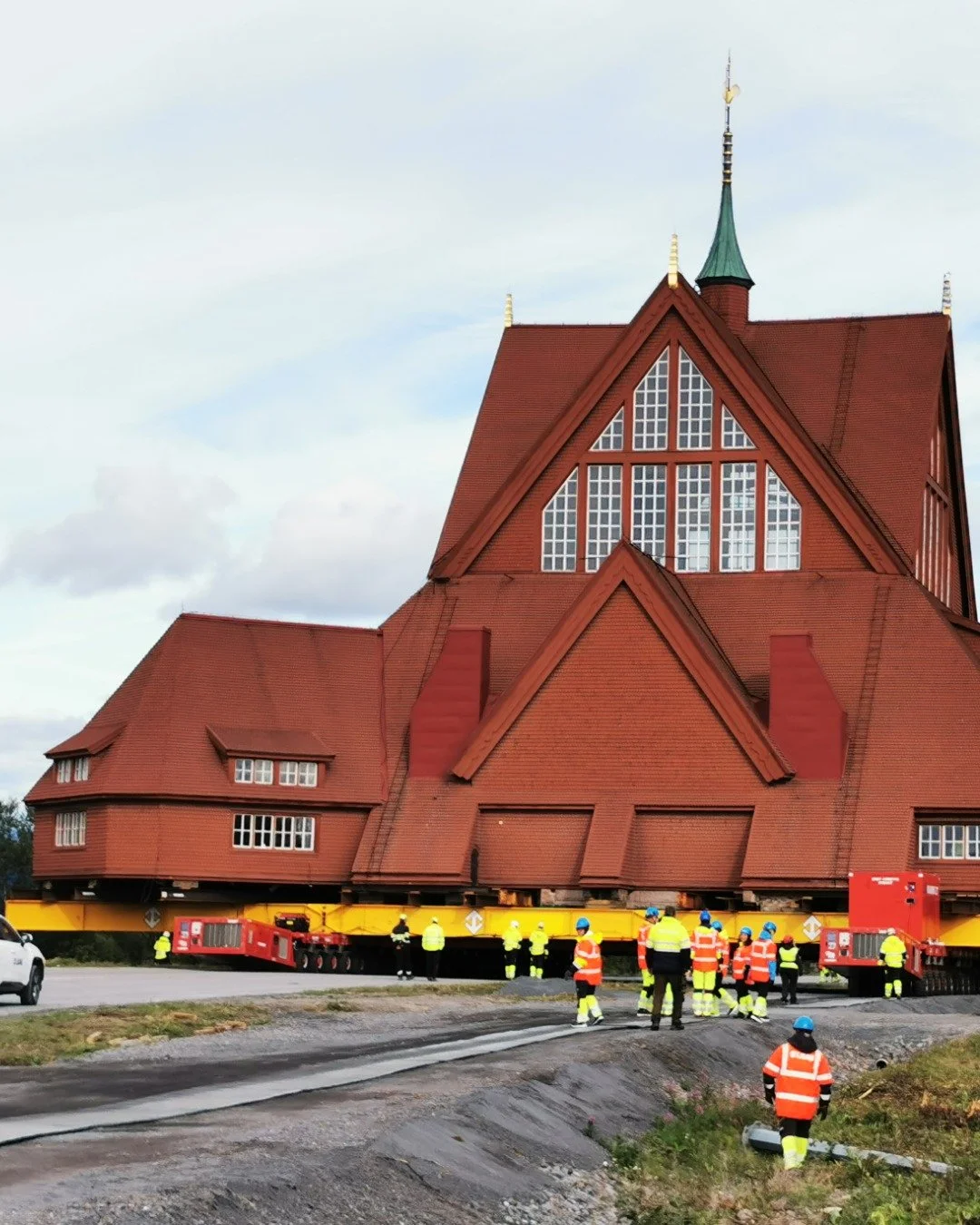
Kiruna Church rolls on self-propelled transporters to its new site, August 2025.
In August 2025, the Swedish city of Kiruna relocated its 113-year-old wooden church, intact, five kilometres across town. It is one of the most ambitious building relocations we have seen anywhere, and it is worth a closer look.
Kiruna Church dates to 1912 and is one of Sweden's largest wooden buildings. It weighs about 672 tonnes and is roughly 40 metres wide. The iron ore mine beneath the old town centre is expanding, so the mining company LKAB is relocating much of the town east to a new centre. The church is one of about two dozen cultural buildings relocated as part of that work.
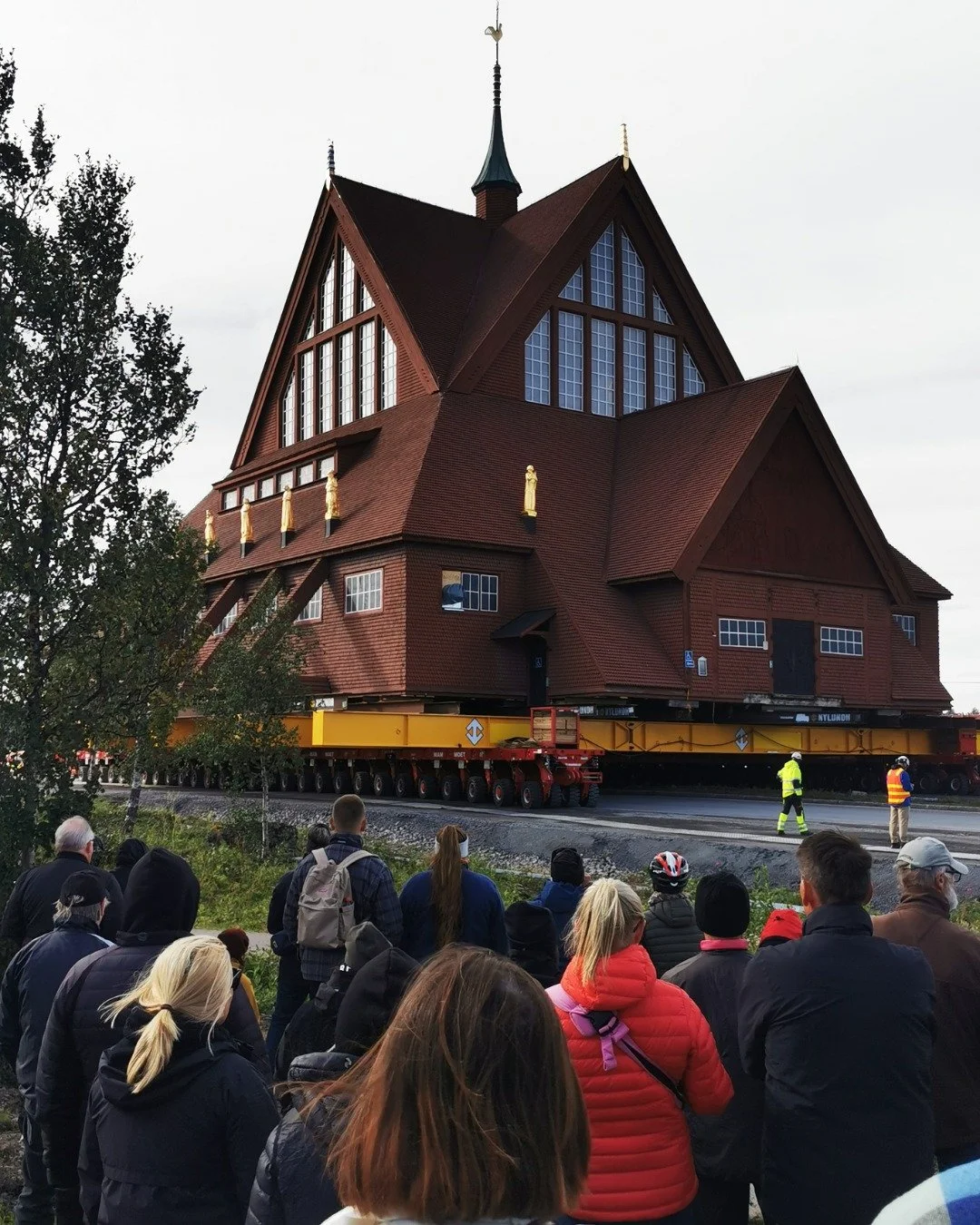
Heavy-lift specialist Mammoet set the church on a steel beam system and rolled it on self-propelled transporters at about half a kilometre an hour, over two days, August 19 and 20. Its 90-tonne belfry followed. On arrival, the church was lowered onto new concrete foundations.
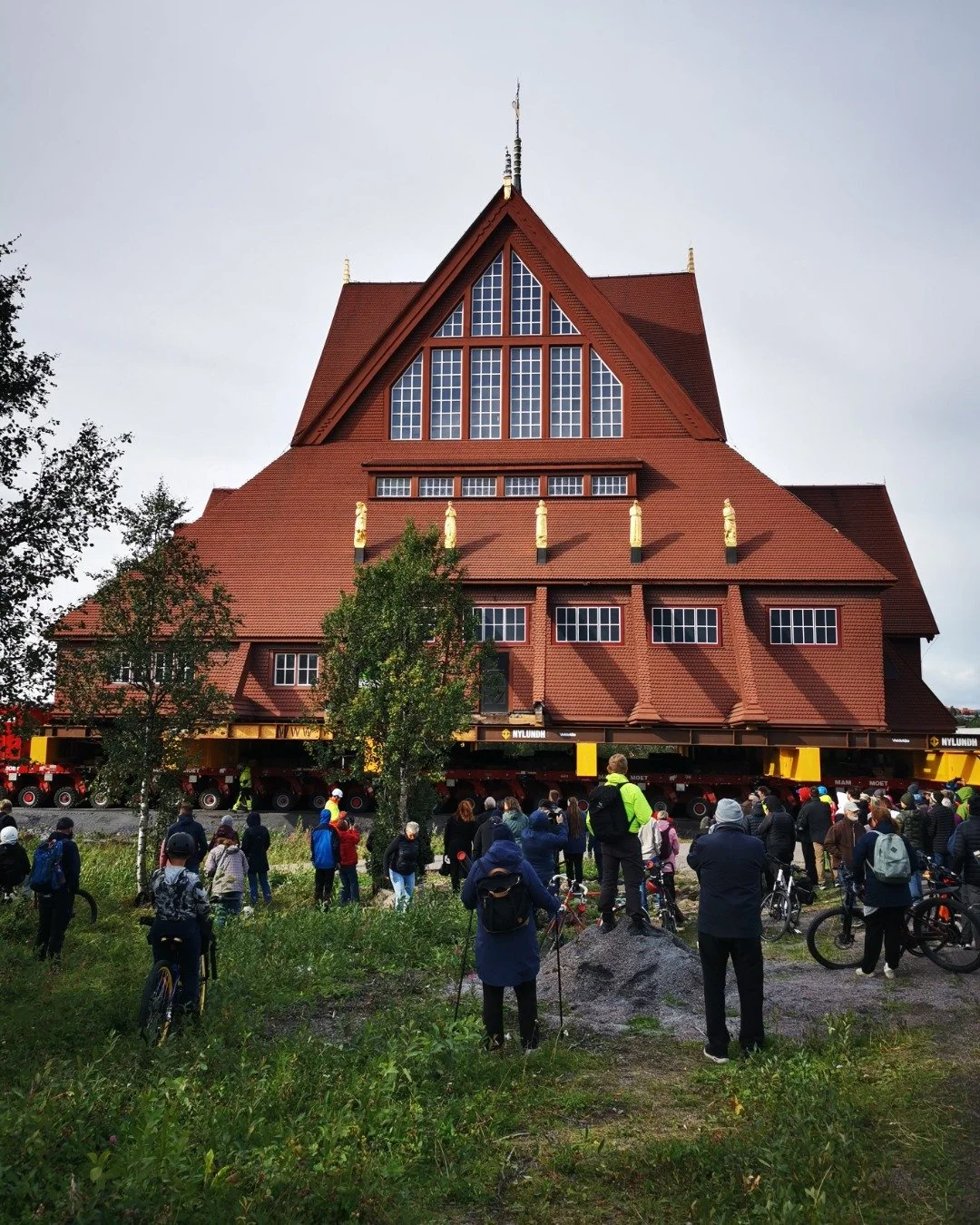
Why it matters here: Kiruna decided its church was worth keeping, then planned, engineered and paid for the relocation. The same logic applies to good homes in British Columbia. By our estimate, about 3,200 homes are demolished in BC every year, and many of them could be relocated, lifted in place or deconstructed for reuse. The tools exist. What changes the outcome is policy that asks the question before a demolition permit is issued.
Our members relocate homes, not churches, but the principle is the same: keep what we have already built, and give it a second life.
Sources: LKAB, Mammoet and Dezeen, August 2025.
Learn more:
LKAB: The moving of Kiruna Church
Dezeen: Kiruna wheels its church to a new location
Renewal Development journal: How Kiruna relocated its church